By:
Sreeni Meka, Principal Executive Officer of Lakeland Wealth Management LLC
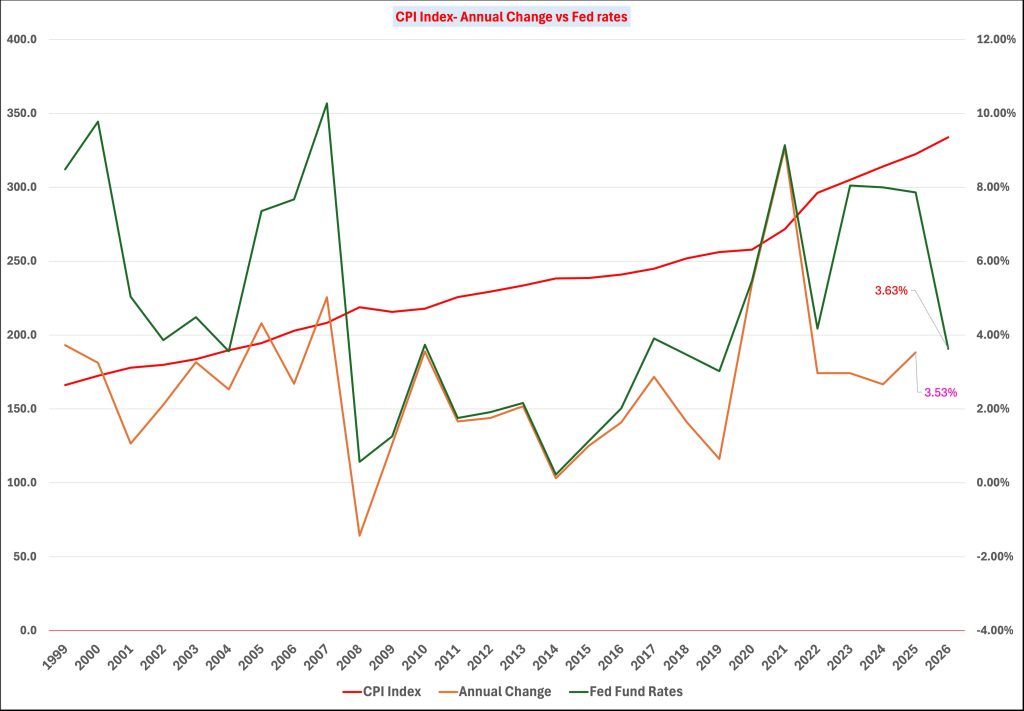
The Federal Reserve held the federal funds rate at 3.50%–3.75% at its latest meeting, but the vote told the real story: three regional Fed presidents dissented in favor of a 25-basis-point hike. Dissents of that breadth signal a committee losing confidence that policy is restrictive enough to finish the job on inflation.
A Collision of Forces
Inflation has now exceeded the Fed’s 2% target for more than 5 years. Just as the latest readings showed tentative moderation, the U.S.–Iran conflict delivered an oil-price shock that threatens to undo that progress. Energy costs feed through quickly—into freight, manufacturing, food distribution, airfares, and utility bills. The risk is no longer a temporary spike at the pump; a sustained shock could re-anchor inflation expectations at uncomfortable levels.
Compounding the problem is an unprecedented capital-spending boom in artificial intelligence, data centers, and power generation. This investment should lift productivity over time, but today it adds demand to an economy already straining against capacity limits. The Fed cannot create more oil, electricity, workers, or GPUs. Its only lever is to suppress demand elsewhere—through higher rates.
Meanwhile, the consumer is showing fatigue. Households face elevated prices, record credit card balances, heavy auto-loan burdens, and mortgage rates near 7%. Notably, long-term Treasury yields are rising even without Fed action—meaning financial conditions are tightening on their own.
The Market Has Voted
Markets rendered a swift verdict: long yields jumped, and the Dow fell more than 1,100 points. The message embedded in the 30-year yield is that investors are demanding greater compensation for long-term inflation risk—and that they fear delay now could force more aggressive hikes later.
The Fed’s Dilemma
The Fed is trapped between two asymmetric risks. Hiking now would not lower oil prices or reverse tariff costs, but it would pressure housing, small businesses, and lower-income households. Waiting risks letting inflation expectations embed themselves in wages, pricing, and long-term rates—a far costlier problem to fix.
The next two inflation reports are the pivot point. Sustained energy-price pressure and accelerating core inflation make a September hike increasingly likely. Stabilizing oil and monthly core prints near 0.2% keep the Fed on hold.
Bottom line
The era of rapid rate relief has been postponed. Position for persistent volatility, structurally higher long-term yields, pressure on leveraged balance sheets, and a more selective equity market. The advantage shifts to companies with strong balance sheets, genuine pricing power, recurring cash flows, and limited near-term refinancing needs—and away from speculative, debt-heavy businesses.
The Fed has bought itself time. How much it does not control: oil, bond markets, and the consumer will decide.
Originally posted on July 30, 2026 by Lakeland Wealth Management LLC
PHOTO CREDITS: https://www.shutterstock.com/g/Blueastro
DISCLOSURES
Investing involves risk, including the possible loss of principal. Diversification does not ensure a profit nor guarantee against a loss.
Lakeland Wealth Management LLC is a registered investment adviser. Lakeland Wealth Management LLC provides data to Interactive Advisors pursuant to a licensing agreement. Lake Wealth Management LLC does not provide investment advice to Interactive Advisors or Interactive Advisors clients.
This material represents an assessment of the market environment at a specific point in time and is not intended to be a forecast of future events, or a guarantee of future results. This information is not intended to be individual or personalized investment or tax advice and should not be used for trading purposes. Please consult a financial advisor or tax professional for more information regarding your investment and/or tax situation.