By:
Christopher N Laine, Senior Portfolio Manager
Timothy J Herlihy, CFA, Portfolio Specialist
Jay Siegrist, Senior Portfolio Manager
The emerging market opportunity set has changed materially, with technology leadership and market concentration now playing a more prominent role in index performance. As traditional macro drivers become less dominant, investors may need to reassess how they evaluate emerging market exposure, risk, and portfolio construction.
Long-term emerging market investors may well be feeling more like tech analysts, given the current state of the asset class. One thing is clear, this is no longer the asset class of days gone by—relatively easily explained by a combination of commodity prices, global growth, rates, and the US dollar. Now, the changing leadership and concentration of the standard emerging market indices make many of these traditional drivers feel almost quaint.
Fundamentals across leading emerging market technology firms are exceptionally strong, while the global capex cycle continues to provide a powerful tailwind. As their market capitalizations have surged, these companies have come to dominate cap-weighted indices. Throw in innovation in financing—not all of it beneficial—that has given companies access to quick leverage to invest in these trends, and the volatility associated with many of these names has been nothing short of extraordinary. It’s worth noting that only a small number of stocks have been participating in this rally: as of the end of July, only about 10% of MSCI EM index names were outperforming this year and the median emerging market firm had a negative return year-to-date for 2026.*
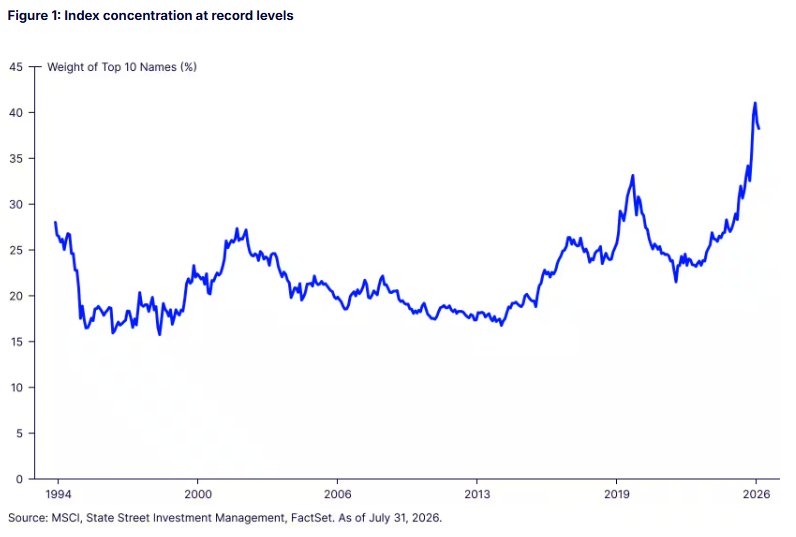
These market movements aren’t happening in a vacuum. They are being driven by the once-in-a-generation earnings power of a relatively small number of firms. The EPS estimate for the MSCI Korea index, for example, is expected to rise a whopping 300% in 2026, with a further 35%+ expected in 2027.* Given the bottlenecks in the semiconductor industry, there could be proper earnings visibility for several years. The other interesting dynamic is that EM stocks have been “under-returning” their earnings, leading to a contraction in multiples. Whether this is good, not good, or simply a curiosity remains unclear.
Implications
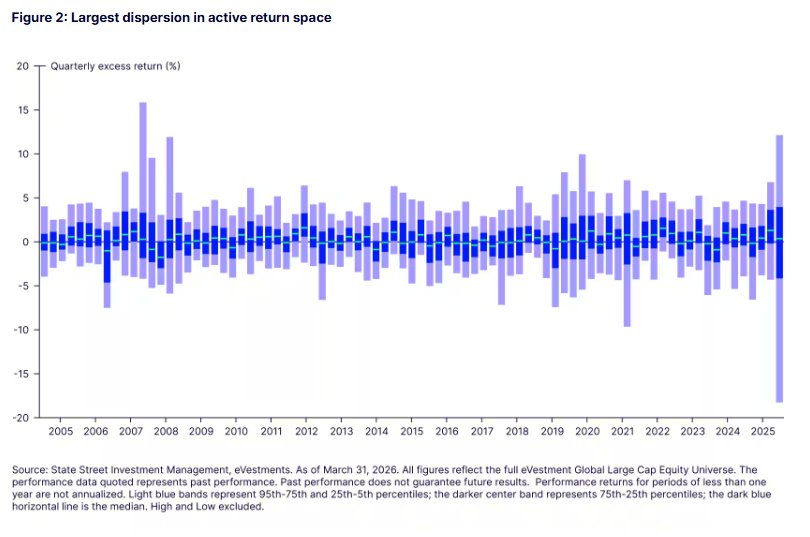
How is the impact of this being felt by investors? Amid the narrowing market concentration, the related payoffs on style bets have been growing—for better and for worse (see Figure 2). This dispersion is nearly unavoidable for managers attempting to play in one corner or another of the market.
Winning by not losing
Certainly, now feels like a time to be cautious with respect to positioning and to lean heavily on risk controls. Markets have experienced a remarkable run: these higher concentration levels remain elevated, and retail participation and leverage have increased meaningfully, contributing to greater volatility and, at times, less efficient price discovery. We believe, with conviction, that now is not the time to take on large style/size exposures. The impact of these will have outsized payoffs given all the risks in the market (whether geopolitical, fiscal, etc). The payoff profile is likely to be large, in one direction or another.
Periods like these are precisely where a systematic process and disciplined risk management framework is most valuable. While the path forward may not be without periods of volatility, the opportunity set remains compelling, and we have confidence in the durability of both our model and investment process. In a market environment where narratives can shift quickly and short-term sentiment often dominates headlines, we believe staying diversified, maintaining disciplined risk controls, and focusing on the strongest underlying signals remain the most effective way to deliver consistency and dependability: it is better to win by not losing.
Originally posted on September 28, 2026 on SSGA blog
PHOTO CREDIT: https://www.shutterstock.com/g/photonphoto
VIA SHUTTERSTOCK
FOOTNOTES AND SOURCES
* Source: Factset, MSCI, State Street Systematic Equity, as of July, 31, 2026.
DISCLOSURES
Marketing Communication
State Street Global Advisors (SSGA) is now State Street Investment Management. Please go here for more information.
Investing involves risk including the risk of loss of principal. All material has been obtained from sources believed to be reliable.
There is no representation or warranty as to the accuracy of the information and State Street shall have no liability for decisions based on such information.
The views expressed in this material are the views of Christopher Laine, Jay Siegrist, Tim Herlihy through the period ended September 8, 2026, and are subject to change based on market and other conditions. This document contains certain statements that may be deemed forward-looking statements. Please note that any such statements are not guarantees of any future performance and actual results or developments may differ materially from those projected.
The information provided does not constitute investment advice and it should not be relied on as such. It should not be considered a solicitation to buy or an offer to sell a security. It does not take into account any investor’s particular investment objectives, strategies, tax status or investment horizon. You should consult your tax and financial advisor.
The information contained in this communication is not a research recommendation or ‘investment research’ and is classified as a ‘Marketing Communication’ in accordance with the Markets in Financial Instruments Directive (2014/65/EU) or applicable Swiss regulation. This means that this marketing communication (a) has not been prepared in accordance with legal requirements designed to promote the independence of investment research (b) is not subject to any prohibition on dealing ahead of the dissemination of investment research.
All information is from State Street Investment Management unless otherwise noted and has been obtained from sources believed to be reliable, but its accuracy is not guaranteed. There is no representation or warranty as to the current accuracy, reliability or completeness of, nor liability for, decisions based on such information, and it should not be relied on as such.
Equity securities may fluctuate in value and can decline significantly in response to the activities of individual companies and general market and economic conditions.
Investing in foreign domiciled securities may involve risk of capital loss from unfavorable fluctuation in currency values, withholding taxes, from differences in generally accepted accounting principles or from economic or political instability in other nations.
Foreign investments involve greater risks than U.S. investments, including political and economic risks and the risk of currency fluctuations, all of which may be magnified in emerging markets.
Index returns reflect capital gains and losses, income, and the reinvestment of dividends. Index returns are unmanaged and do not reflect the deduction of any fees or expenses.
The trademarks and service marks referenced herein are the property of their respective owners. Third party data providers make no warranties or representations of any kind relating to the accuracy, completeness or timeliness of the data and have no liability for damages of any kind relating to the use of such data.
The whole or any part of this work may not be reproduced, copied or transmitted or any of its contents disclosed to third parties without State Street Investment Management’s express written consent.
The performance data quoted represents past performance. Past performance does not guarantee future results.