By: Sreeni Meka, Principal Executive Officer of Lakeland Wealth Management LLC
Markets run on fear or greed. A great time to invest is when there is no euphoria. Our animal instincts kick in when we see or hear unpleasant scenarios. First tariffs, then immigration issues, labor shortage in low-skilled jobs, and then the Iran war. The knee-jerk reaction is fight-or-flight, and flight to safety. Historically, the US dollar used to be the safe haven, but with uncertain domestic policies and tariff penalties, most foreign reserve banks are diversifying their assets into precious metals like gold, which has pushed prices to speculative levels above $5,000. The exogenous oil shock is evident worldwide, including in energy-rich nations like the US and Canada, driven by oil prices tied to European Brent crude.
Most of the events that occurred are well known, and markets adjusted as they happened. Gold’s value is always speculative and depends on short-term demand and supply, as it has no productive yield other than storage costs. Oil prices reached $147.50 on July 11th, 2008, which is equivalent to approximately $222. Our economy survived, and the market rebounded eight months later, in 2009, despite the oil shock. Now we are energy independent, and net-net we export energy with improvements in drilling and shale technology.
The market never goes up straight. Markets fluctuate and drop on and off. When volatility picks up, people panic, make wrong decisions, and end up losing. If you are investing for the long run, short-term volatility shouldn’t bother you at all. Many times, you can find some of the best companies at reasonable prices when panic hits. Investing is not all about your analytical and financial analysis; it is more about emotional balance. Your higher education, including your business degrees and Charter membership at CFA Institute, can give you a ten percent edge, but the rest of the returns come from how emotionally stable you are when things get ugly. As Famous investors Buffett and Munger say, it is not your IQ that determines your returns in the markets, but your emotional common sense. As long as you own cash-generating companies and consistently generate cash and grow at a reasonable rate, there is not much to worry about.
A war in the Middle East has nothing to do with your consumption of food, drinks, and medicines. History may not repeat exactly, but some patterns tend to be realistic. The second year of the presidential term is usually volatile, particularly when both Congress and White House are held by one party. During mid-term elections, Americans tend to give power to the opposition because most Americans are independent thinkers and always look for what is good for the country. Hung Congress is good for the markets, and a President in power will not have carte blanche. No wonder the third year of the presidential term mostly ends up positive. At the beginning of the year, most analysts and wealth managers were very optimistic, expecting markets to continue their expansion, which was not a positive sign. That was one of the reasons we sold some of the high-growth firms and moved into defensive investments and fully invested. It is hard to time the markets, but a cautious approach is not a sign of weakness.
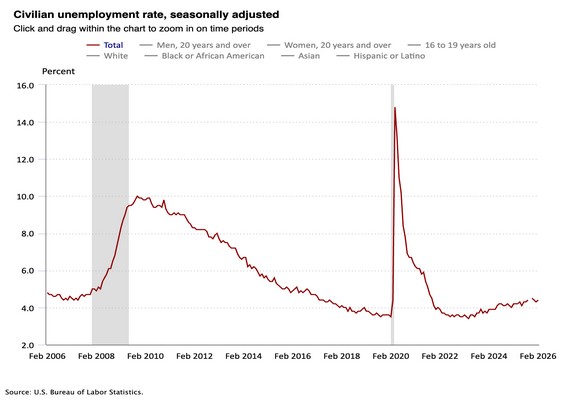
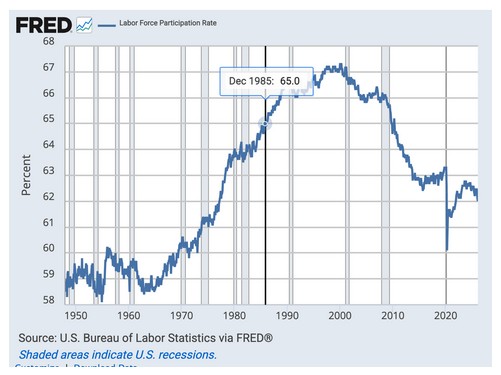
At the macroeconomic level, our economy is still growing at a healthy pace, partly due to deregulation, a business-friendly administration, less government intervention, and tax cuts, although tariffs and iron-fisted immigration policies are somewhat acting as negative forces. Despite the Middle East war, we will never face oil and gas supply constraints. Our employment level is 4.2 percent, which is historically low, and labor participation is at 62 percent due to an aging population and lower immigration levels. The economy can easily absorb more labor. Inflation has been stubbornly downward sticky, remaining at 2.4 percent, partly due to higher import costs and utility expenses. Due to persistent inflation, perceived high energy costs, and lower unemployment levels, the Fed left the short-term interest rate unchanged at 3.64 percent (3.5 to 3.75%).
The firms we invest in are thoroughly vetted and processed after poring over their financial statements and, sometimes, speaking with corporate leaders. There was no room for speculation except due diligence. There is no guarantee that we will always end up positive. Financially strong firms with able management like Berkshire Hathaway, were also underperforming; that does not mean these firms are down and out. When things get rough, these well-run firms outshine the highfliers. Investing is a marathon; If you sprint, you could go faster but not farther. Patience is the name of the game. America weathered too many ups and downs; our corporations are far stronger and better equipped to handle the ups and downs of both domestic and global economies. Certain things are beyond our control, and we focus on what we can control. In the turbulent market, prudence pays dividends. Tighten the belts; volatility is ahead, but do not stop saving amid the market noise. Savers and investors prevail in the long run.
Originally published on March 20, 2026 by Lakeland Wealth Management LLC
PHOTO CREDIT: https://www.shutterstock.com/g/fizkes
VIA SHUTTERSTOCK
DISCLOSURES
Investing involves risk, including the possible loss of principal. Diversification does not ensure a profit nor guarantee against a loss.
Lakeland Wealth Management LLC is a registered investment adviser. Lakeland Wealth Management LLC provides data to Interactive Advisors pursuant to a licensing agreement. Lake Wealth Management LLC does not provide investment advice to Interactive Advisors or Interactive Advisors clients.
This material represents an assessment of the market environment at a specific point in time and is not intended to be a forecast of future events, or a guarantee of future results. This information is not intended to be individual or personalized investment or tax advice and should not be used for trading purposes. Please consult a financial advisor or tax professional for more information regarding your investment and/or tax situation.